Verification Delays and Their Role in Tempering Impulse Bets Across Digital Platforms
Written by Rosa Becker · Jul 13, 2026

Verification Delays and Their Role in Tempering Impulse Bets Across Digital Platforms
Verification procedures on digital betting platforms require users to submit identification documents, proof of address, and sometimes biometric data before full account access is granted, and these steps often create deliberate pauses between account creation and the ability to place wagers. Platforms integrate automated checks with manual reviews when discrepancies arise, which extends processing times from minutes to several hours or even days depending on the jurisdiction and volume of submissions. Research from regulatory bodies indicates that such intervals reduce the speed at which new users can act on immediate urges to bet, particularly in environments where real-time deposits and quick spins dominate user behavior.
Mechanics Behind Platform Verification Systems
Digital operators deploy multi-layered verification that begins with basic email confirmation and progresses to government-issued ID uploads processed through third-party services, while additional layers such as facial recognition or address verification kick in for higher-risk accounts. These systems flag inconsistencies automatically, routing them to human reviewers who cross-reference data against external databases, and the entire sequence operates under strict timelines set by licensing authorities. Data from the New Jersey Division of Gaming Enforcement shows that verification completion rates climb steadily when platforms enforce sequential checkpoints rather than allowing instant access after deposit, which alters the typical flow of impulse-driven sessions.
Operators adjust verification speed based on risk profiles, so low-risk users in established markets experience shorter waits while those in regions with higher fraud rates face extended scrutiny, and this differentiation helps platforms balance compliance costs against user retention metrics. Studies conducted by academic researchers at the University of Nevada, Reno highlight how these tiered approaches correlate with measurable drops in first-hour betting activity among newly registered accounts.
Effects on Impulse Betting Patterns
Impulse bets typically occur when users encounter promotional triggers or live events that prompt immediate wagers without prior planning, yet verification delays interrupt that momentum by requiring completion of identity checks before funds can be used. Platforms report that a significant portion of attempted deposits during the verification window are abandoned, which directly lowers the volume of spontaneous wagers that would otherwise occur within the first 30 minutes of account activity. Figures from the Australian Communications and Media Authority reveal consistent patterns where delayed verification windows coincide with reduced session lengths and lower average bet frequencies across multiple operator datasets.
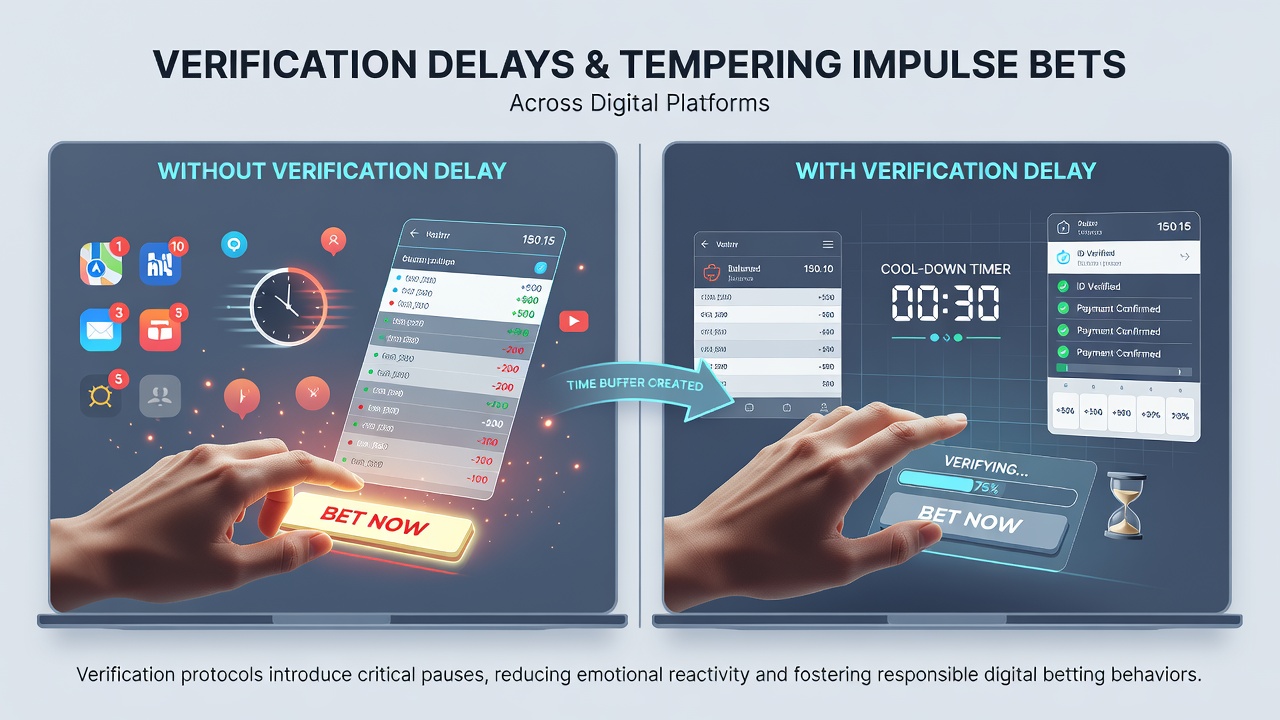
Behavioral tracking tools employed by operators capture these interruptions as shifts in user navigation, with many individuals exiting the platform temporarily or permanently when verification stalls their initial deposit flow. As of July 2026, several major platforms updated their onboarding flows to include progress indicators that inform users of expected wait times, and these adjustments have produced modest improvements in completion rates while still preserving the cooling-off effect on impulse actions. Observers note that the same mechanisms also surface in live dealer environments where table access requires verified status before participation begins.
Regional Regulatory Influences and Platform Adaptations
Regulators in North America and parts of Europe mandate verification timelines as part of responsible gaming frameworks, which forces platforms to embed delays rather than optimize for speed alone, and these requirements vary by province or state. In Ontario, for instance, the Alcohol and Gaming Commission enforces strict KYC standards that extend average verification to 24 hours in some cases, while similar rules in Australian states tie verification completion to deposit limits that activate only after identity confirmation. Platforms respond by developing hybrid models that allow limited play with small deposits during verification, yet full access and larger stakes remain locked until checks clear, which maintains regulatory compliance without fully eliminating early engagement.
Cross-border operators face additional complexity when serving users from multiple jurisdictions simultaneously, requiring them to apply the strictest applicable verification rules to each account based on location data. This results in inconsistent wait times across user bases and influences how marketing campaigns time their bonus offers to align with completed verifications rather than initial sign-ups.
Industry Data on Session and Deposit Metrics
Industry reports compiled from aggregated operator data indicate that verification-related pauses correlate with 15 to 30 percent reductions in impulse deposit attempts within the first day of registration, while overall account conversion rates remain stable once verification finishes. These patterns hold across slot-focused platforms and sports betting interfaces alike, suggesting the effect stems from the temporal gap rather than game type. Researchers tracking multi-platform usage find that users who complete verification later in the day often return with more structured betting plans instead of the rapid, repeated small wagers seen in unverified flows.
Conclusion
Verification delays function as structural features within digital betting ecosystems that consistently moderate the pace of initial user activity across regions and operator types. Data collected through 2026 continues to demonstrate their impact on deposit timing and session characteristics, while platforms refine implementation to meet evolving regulatory expectations without altering the core tempering mechanism. These processes remain integral to compliance strategies that prioritize identity confirmation alongside engagement controls.