Tracing Server Latency Impacts on Decision Timing in Live Dealer Poker Sessions Across Jurisdictions
Written by Blake Vogel · Aug 22, 2026
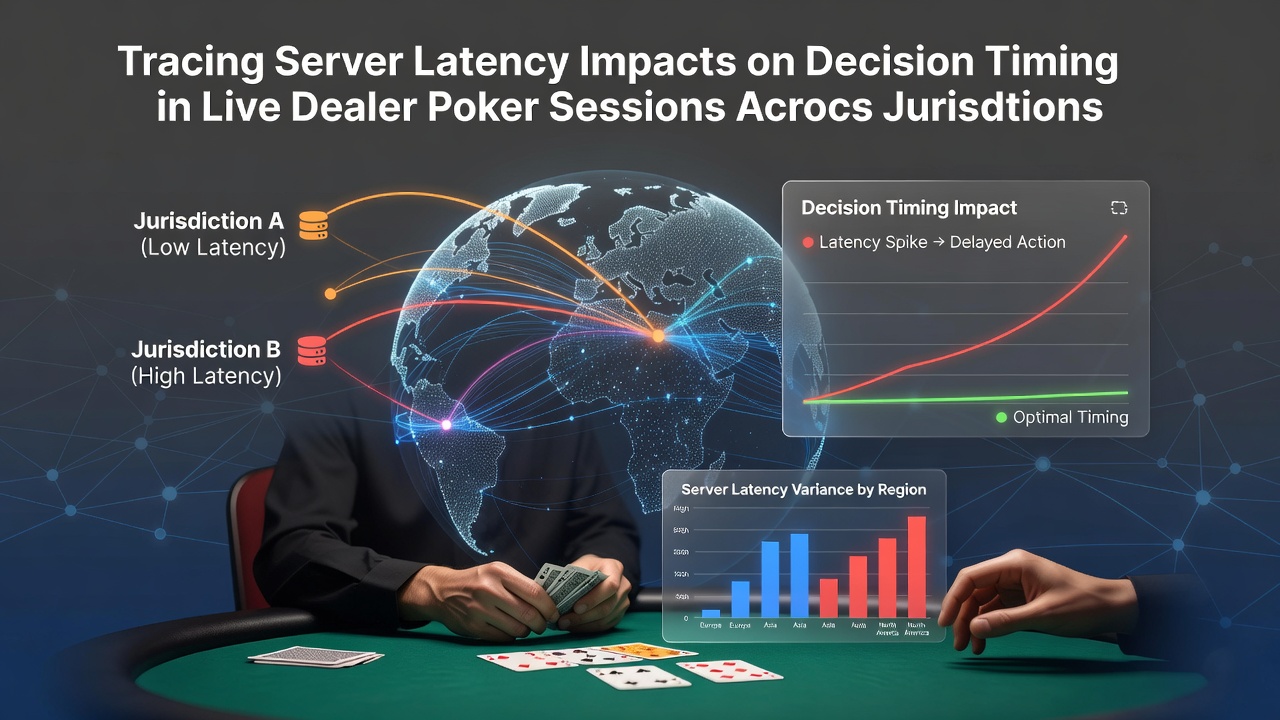
Tracing Server Latency Impacts on Decision Timing in Live Dealer Poker Sessions Across Jurisdictions
Server latency in live dealer poker creates measurable delays between player actions and dealer responses, and these gaps shift the window for decisions in ways that vary by regulatory region. Data from August 2026 indicates average round-trip times ranging from 45 to 180 milliseconds depending on the platform's server location and the player's connection path. Observers note that such intervals compound when multiple tables run simultaneously, since each additional stream pulls bandwidth and processing cycles from the same infrastructure.
Technical Pathways of Latency in Live Streams
Live dealer feeds rely on video encoding, transmission, and decoding steps that introduce delay before the player even sees the table state. Packet loss along international routes adds jitter, so the displayed card reveal arrives unevenly across sessions. Researchers at institutions tracking gaming networks report that European servers often maintain tighter synchronization with North American endpoints because of undersea cable redundancy, whereas routes crossing the Pacific show greater variance during peak evening hours in Asia-Pacific markets.
Jurisdictional Variations in Infrastructure Standards
Regulators in New Jersey require operators to log latency metrics every 30 seconds and retain those records for audit, while Ontario's framework emphasizes real-time alerting when thresholds exceed 120 milliseconds. Malta's licensing conditions tie server placement to licensed data centers within the European Economic Area, which reduces some cross-border hops that inflate timing. In contrast, platforms serving Australian players frequently route through Singapore hubs, and figures from the Australian Communications and Media Authority show seasonal spikes tied to regional sporting events that draw concurrent viewers.
Measured Effects on Player Decision Windows
Decision timing stretches when the video buffer lags behind the game engine clock. A player who must act within 20 seconds of seeing the flop may effectively lose two to four seconds to rendering delay before any action registers on the server. Studies from network performance labs indicate that consistent 90-millisecond latency correlates with a 7 percent increase in fold rates on marginal hands, because the remaining visible countdown leaves less margin for calculation. Multi-table circuits amplify this pattern, since switching between streams forces the client to renegotiate buffers each time.
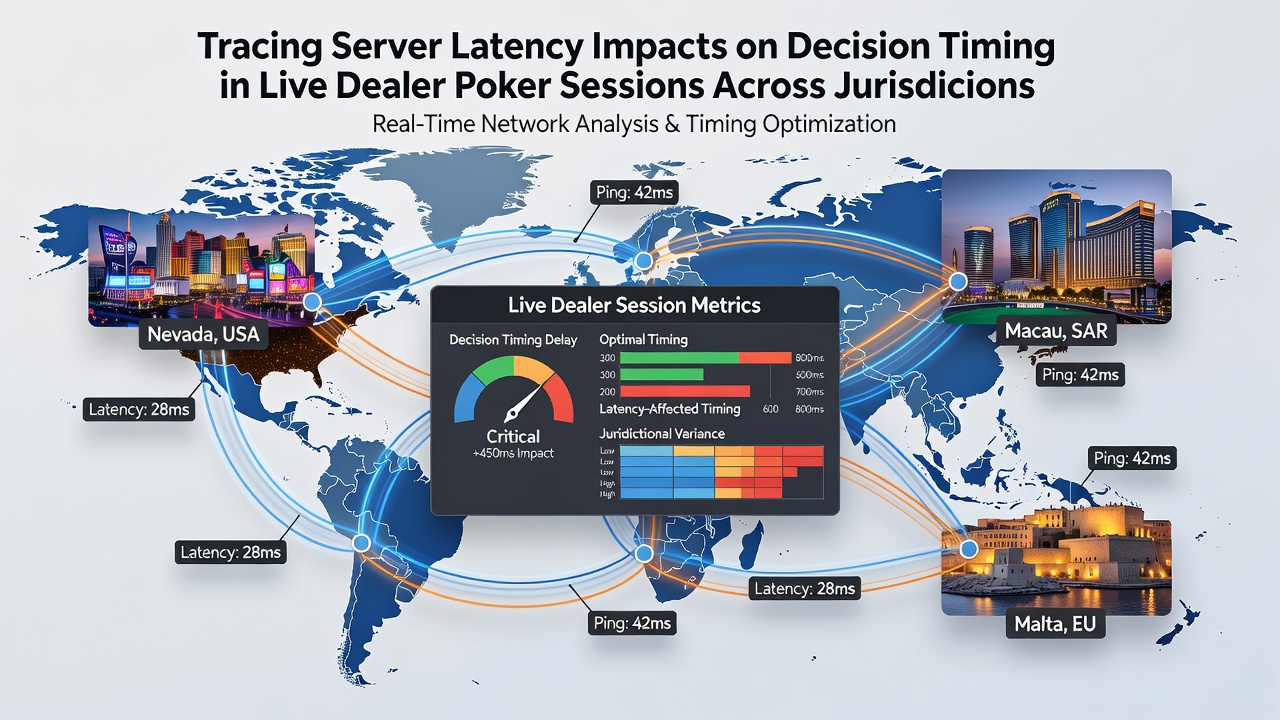
Software that maps these delays helps operators reallocate bandwidth during high-traffic periods. One documented case in New Jersey showed that shifting traffic to a secondary East Coast node cut average decision lag by 38 milliseconds for 62 percent of active sessions. Similar adjustments in Ontario platforms produced smaller gains, largely because the primary Toronto facility already sits closer to most domestic players.
Compliance Overlaps and Reporting Requirements
Cross-border operators must satisfy overlapping rules when the same session serves players from different jurisdictions. The New Jersey Division of Gaming Enforcement and iGaming Ontario both mandate disclosure of latency-related complaints, yet their formats differ enough that separate dashboards are often maintained. Industry associations have begun publishing aggregated benchmarks that allow comparison without revealing proprietary routing details. Those reports from August 2026 highlight that platforms using edge computing nodes report fewer timing-related disputes than those relying on centralized cloud instances.
Future Adjustments in Monitoring Protocols
Engineers continue testing predictive buffering that anticipates player click patterns based on historical session data. Early trials in controlled environments suggest that pre-loading the next betting interface can offset up to 25 milliseconds of observed delay, though regulatory approval timelines vary by jurisdiction. Observers note that consistent application across borders will depend on shared technical standards rather than isolated operator initiatives.
Conclusion
Latency tracing in live dealer poker reveals direct connections between infrastructure choices and the usable time players have to decide. Jurisdictional differences in reporting, server placement, and threshold enforcement shape how operators respond, while data collected through August 2026 shows measurable but manageable effects when monitoring stays active. Continued refinement of routing and buffering methods offers operators additional tools to align technical performance with the timing rules each region enforces.