How Community Features Drive Engagement Shifts in Virtual Multiplayer Poker Settings
Written by Blake Vogel · Jul 25, 2026
How Community Features Drive Engagement Shifts in Virtual Multiplayer Poker Settings
Virtual multiplayer poker platforms have incorporated community features that alter how participants interact and sustain their involvement over extended periods, and data collected through mid-2026 shows measurable changes in session lengths and return rates across regulated networks. These tools include real-time chat systems, shared leaderboards, team-based tournaments, and integrated forums that connect players beyond individual hands. Observers tracking platform metrics note that such additions coincide with shifts in user retention patterns, particularly on sites operating under licenses from bodies like the Nevada Gaming Control Board and the Malta Gaming Authority.
Chat Systems and Real-Time Interaction Patterns
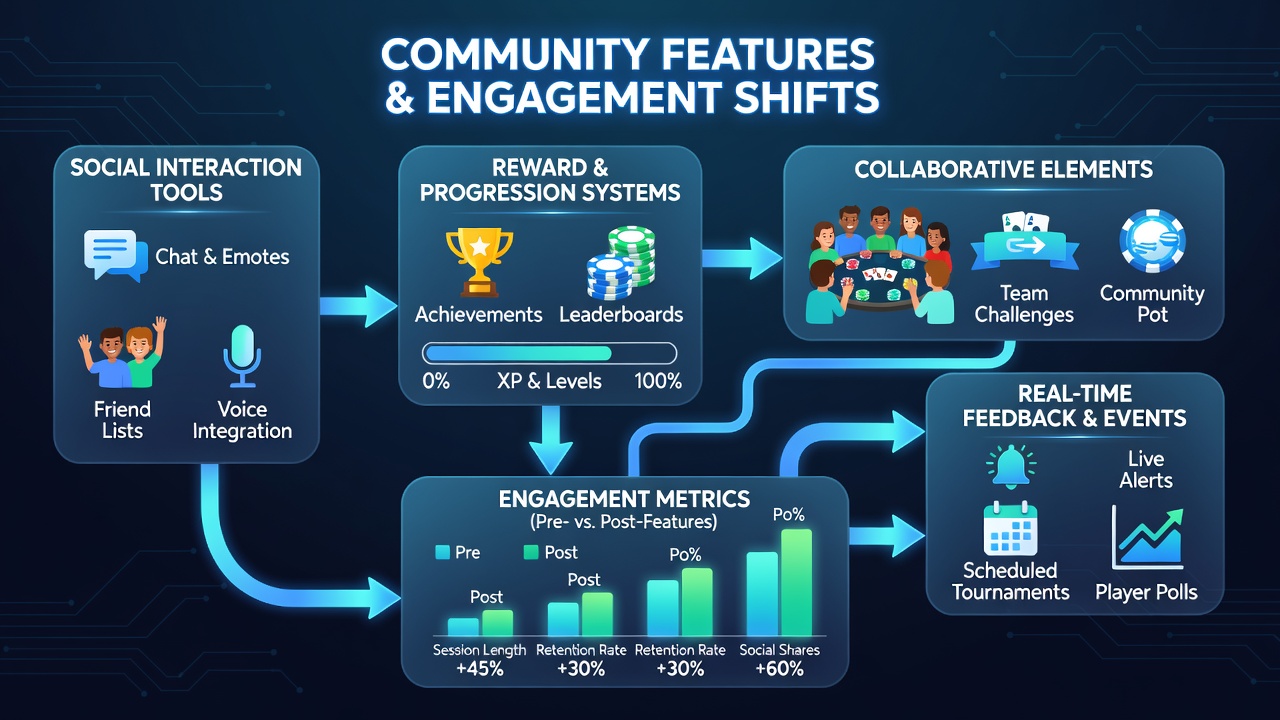
Integrated chat functions allow players to exchange messages during and between hands, which creates ongoing social connections that extend play sessions. Research from academic studies on digital gaming communities indicates that platforms enabling moderated chat see higher average time spent per user compared to those without such options, because participants form loose groups that return for scheduled events. In July 2026 reports covering cross-platform activity, operators documented increases in concurrent users during peak evening hours when chat moderation tools filtered disruptive behavior while preserving conversation flow.
These systems also support quick invitations to private tables, turning solitary sessions into repeated group activities. Figures from industry analyses reveal that players who join chat-enabled rooms log in more frequently within the same week, since the social layer reduces the isolation common in earlier solo-play formats. Turnout at community-organized sit-and-gos rises when chat reminders circulate among established contacts, according to aggregated data from multiple virtual operators.
Leaderboards, Clans, and Competitive Structures
Public leaderboards display rankings based on points accumulated through wins, volume played, or specific achievements, which encourages consistent participation to maintain or improve position. Virtual poker networks that introduced weekly or monthly leaderboards recorded elevated engagement metrics, with repeat login rates climbing as users monitored their standing against peers. Clan or team features further organize players into groups that compete collectively, and statistics released in 2026 showed these groups sustaining activity levels higher than individual accounts during off-peak periods.
Observers note that ranking systems tied to community events produce measurable shifts in play volume, because participants adjust schedules to align with leaderboard reset cycles. One platform operating across European markets reported that clan tournaments accounted for a substantial portion of table traffic in the first half of 2026, while separate studies linked visible progress bars and achievement badges to longer session durations. These elements operate alongside core gameplay rather than replacing it, creating layered incentives that keep users returning without altering the underlying poker mechanics.
Tournament Integration and Shared Events
Community-driven tournaments blend individual competition with group participation, often featuring entry through social channels or team qualifiers. Data from multi-state operators indicates that events promoted via in-platform forums or chat announcements draw larger fields than standard scheduled games, with registration numbers rising when players receive direct invites from contacts. In July 2026, several networks expanded these formats to include satellite events leading to larger community finals, and participation logs showed sustained growth in unique daily users during those cycles.
Shared event structures also incorporate spectator modes where non-players follow ongoing tables and comment in real time, which expands the audience and occasionally converts viewers into active participants. Research tracking digital wagering platforms has documented that such visibility features correlate with higher overall platform traffic, since the community aspect extends reach beyond the core player base. Operators report that repeat attendance at recurring community tournaments stabilizes monthly active user counts, even as individual game preferences vary.
Forum Discussions and Long-Term Retention
Dedicated forums and discussion boards attached to poker platforms provide spaces for strategy sharing, hand reviews, and event planning outside live sessions. Usage data from 2026 indicates that users who engage with these boards maintain accounts longer than those who limit activity to tables alone, because the forums create ongoing ties to the platform ecosystem. Moderated sections focused on responsible play guidelines and rule clarifications further support consistent access without external disruptions.
Cross-platform integrations allow forum activity to influence in-game rewards, such as bonus entries earned through constructive contributions, which ties community participation directly to engagement metrics. Analyses from research institutions covering North American and Asian markets note that these connections produce steadier login patterns across time zones, since forum threads remain active between peak playing hours. The result appears in aggregated retention figures that track both table time and off-table interaction as combined indicators of platform health.
Conclusion
Community features in virtual multiplayer poker settings continue to influence engagement through interconnected tools that link social interaction with competitive play. Metrics gathered through July 2026 demonstrate that chat systems, leaderboards, shared tournaments, and forums each contribute to altered return patterns and session behaviors across licensed networks. These developments operate within regulatory frameworks set by authorities including the Nevada Gaming Control Board and the Malta Gaming Authority, where operators monitor outcomes through established reporting channels. As platforms refine these elements, the data on user activity provides ongoing reference points for how social layers integrate with core poker formats.