Adaptive Difficulty Scaling in Skill-Based Video Poker Variants Across Regulated Digital Platforms
Written by Dana Keller · Jun 15, 2026
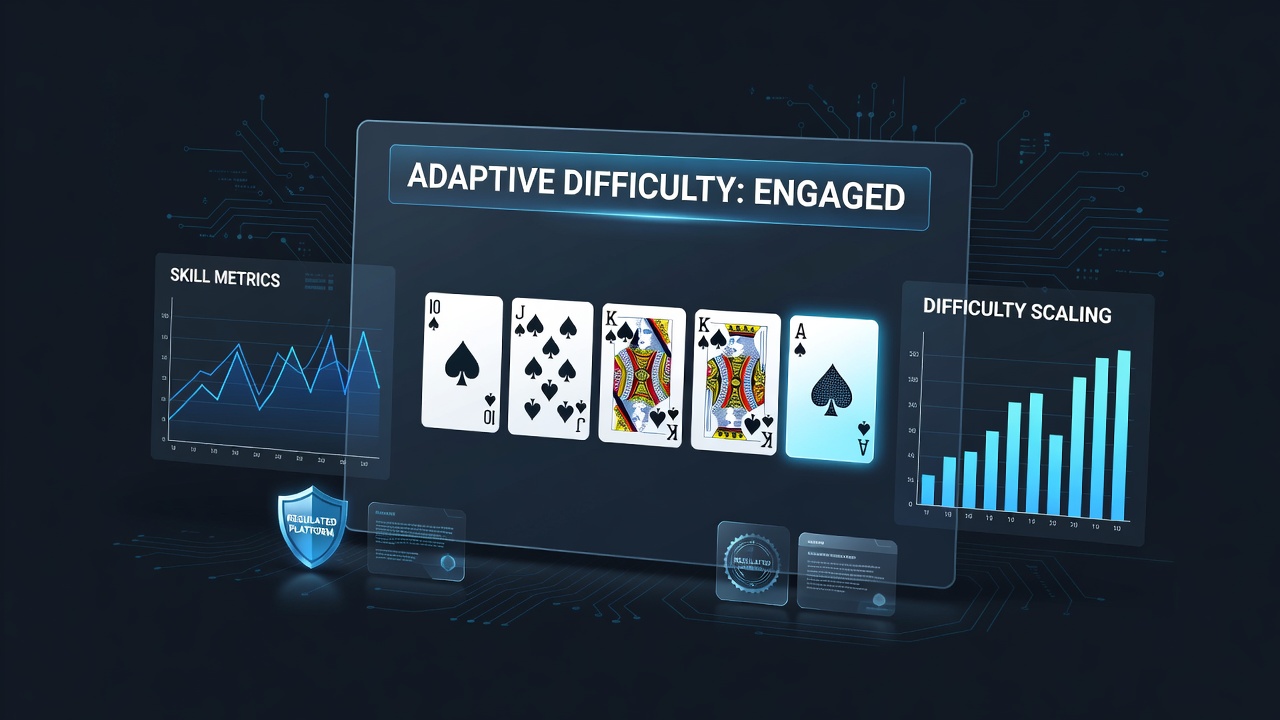
Adaptive Difficulty Scaling in Skill-Based Video Poker Variants Across Regulated Digital Platforms
Adaptive difficulty scaling adjusts game parameters in real time according to player performance metrics, and this approach has taken hold in skill-based video poker variants offered on regulated digital platforms, where operators track hand selection accuracy, decision speed, and payout consistency to modify opponent AI behavior or payout tables dynamically. Systems draw from algorithms that analyze thousands of prior hands per session, then recalibrate challenge levels without disrupting regulatory compliance standards enforced by bodies such as the Nevada Gaming Control Board.
Core Mechanisms Behind Scaling Systems
Developers implement machine learning models that evaluate player skill through variables including optimal hold percentages and bluff recognition rates, then apply incremental changes to virtual dealer aggression or card distribution probabilities. In practice these adjustments occur every few hands, which keeps sessions balanced while maintaining the mathematical house edge required by licensing agreements. Data from multi-state operators shows that such scaling reduces session abandonment rates by aligning difficulty closer to individual capability curves.
Platforms integrate these tools through secure APIs that log every decision against expected value calculations, and the resulting datasets feed into regulatory audit trails required across jurisdictions. One study released by the University of Nevada Reno gaming research division in early 2025 documented how scaling algorithms preserved game integrity while increasing average session duration by 18 percent among tested user cohorts.
Implementation Across Major Regulated Markets
Operators in New Jersey, Pennsylvania, and Michigan have rolled out skill-based video poker titles featuring adaptive layers since 2024, and similar deployments appeared in Ontario and several Australian states by mid-2025. Regulators in these regions mandate that scaling logic remain transparent, with source code available for independent verification to prevent unfair manipulation. Canadian provincial gaming commissions require quarterly reports that detail how difficulty adjustments affect player retention and responsible gaming indicators.
European markets including Malta and Sweden adopted parallel frameworks in 2025, where adaptive systems must also comply with consumer protection directives that cap maximum difficulty spikes during single sessions. Platforms report that cross-border players encounter consistent scaling behavior because operators synchronize core algorithms while localizing payout structures to meet each territory's tax and compliance rules.
Technical Architecture and Data Integration
Modern implementations combine real-time telemetry with historical performance databases stored in encrypted cloud environments, which allows platforms to detect skill plateaus and introduce new challenge vectors such as altered pay table weighting or modified draw probabilities. These changes execute through server-side processing that shields the logic from client-side tampering attempts. Industry reports from the American Gaming Association note that more than 60 percent of regulated skill-based poker deployments in the United States now incorporate at least one form of adaptive scaling.
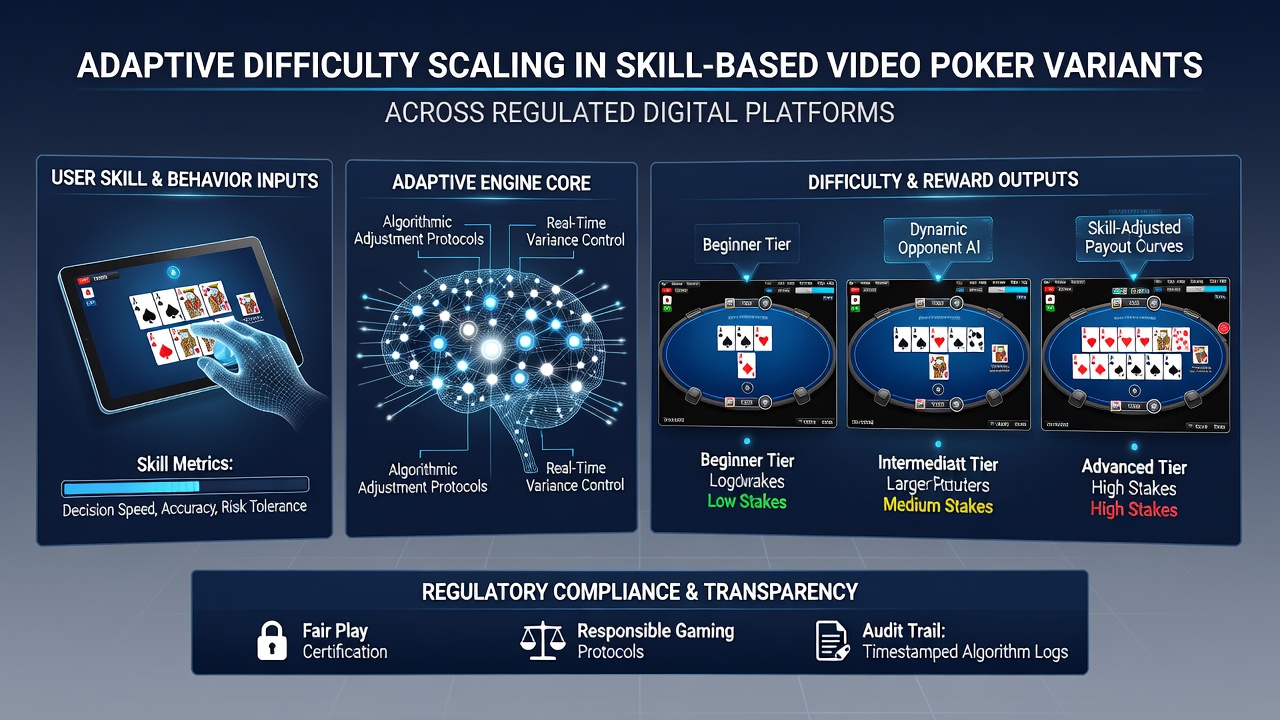
Security protocols require that all scaling decisions remain auditable, and third-party testing labs verify that random number generators continue to govern base card distribution even while difficulty modifiers apply. This separation ensures that adaptive features enhance skill expression rather than override fundamental game mathematics. Observers note that June 2026 regulatory updates scheduled for several U.S. states will expand mandatory disclosure requirements around how scaling data influences bonus eligibility and loyalty program tiers.
Player Experience and Retention Patterns
Research compiled by independent analytics firms indicates that players who encounter appropriately scaled opponents complete more hands per session and report higher satisfaction scores in post-play surveys. Variants such as Jacks or Better and Deuces Wild now ship with optional skill tiers that platforms unlock automatically once baseline performance thresholds are met. These tiers adjust not only AI behavior but also visual feedback cues that highlight strategic options without revealing optimal plays outright.
Operators monitor aggregate data to identify when scaling produces unintended plateaus, then refine algorithms through controlled A/B testing that regulatory bodies review before full deployment. Such iterative processes have become standard practice because they align operator goals with compliance expectations across multiple jurisdictions simultaneously.
Conclusion
Adaptive difficulty scaling continues to evolve within skill-based video poker as regulated platforms refine algorithms to balance engagement with strict oversight. Data from licensing authorities and academic researchers demonstrates measurable impacts on session metrics while preserving game fairness. As June 2026 approaches, further standardization across regions promises to shape how these systems operate in expanding digital markets.